Category Archives: academic pleasures

hot connections

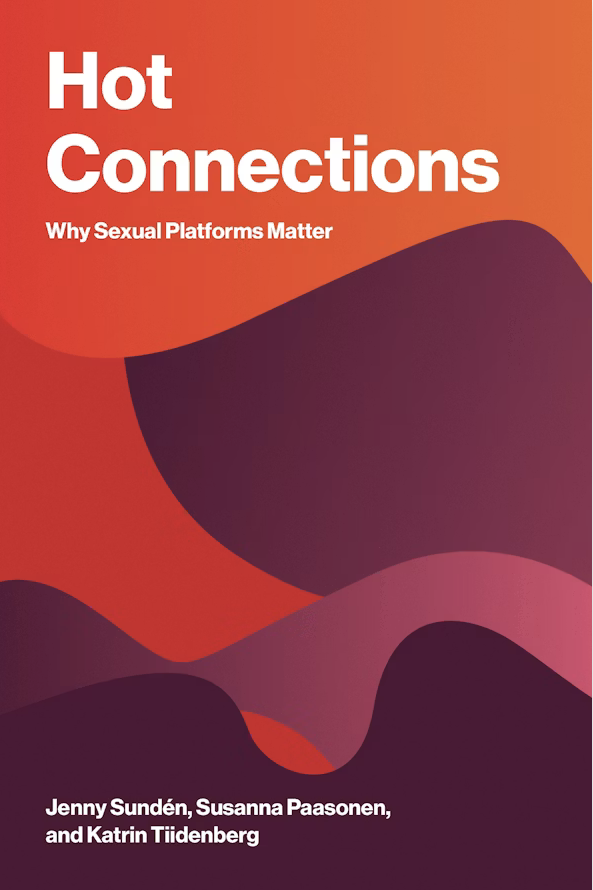
Our book, Hot Connections: Why Sexual Platforms Matter, coauthored with Jenny Sundén and Katrin Tiidenberg, will be out in March on open access with the MIT Press: very exciting conclusion to what has been such an enjoyable collaboration within the Rethinking Sexuality project. As has been the case with my previous books with the publisher, the cover design is fabulous. This is the summary:

A rethinking of “the social” in social media which includes the sexual.

What can we learn from including sexual platforms in definitions of social media and, by extension, from including sex in definitions of “the social” itself? Hot Connections explores three locally operating sexual platforms: the Swedish Darkside, used by kink and BDSM practitioners; the Estonian Libertine Center, used mainly by nonmonogamous people; and the Finnish Alastonsuomi, used for a wide variety of nude and sexual displays of self-expression. What avenues do these platforms open for understanding the role that sexuality plays in people’s networked routines, social bonds, and forms of relating?

Sexual social media affords freedom of worldmaking, belonging, and a right to sexually exist. While providing vital spaces for sexual self-expression—and indeed, hot connections—platform connectivity also involves friction as expectations, wishes, and desires clash and collide.

Intervening in debates on the value of sexual social media, Hot Connections discusses what it means to research sexuality when sexual data is understood as sensitive by default, what platform governance may look like if viewed from the margins, and how sex and intimacy are not the same thing in networked sexuality.
Leave a comment

Filed under academic pleasures, feminist media studies, internet research, NSFW, sexuality

absurdity, Twitter comedy, and humor bots

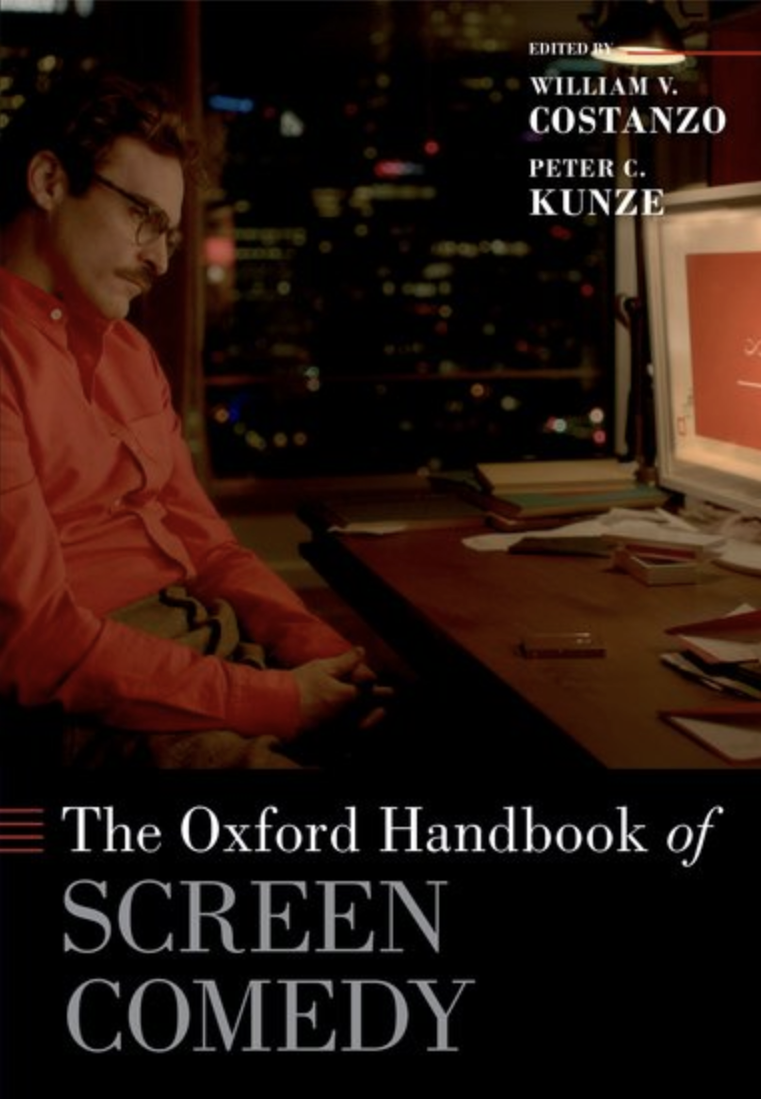
It is no breaking news that, in internet research, things very quickly become recent history. Especially when it comes to handbooks that take some years to put together. Hence, behold!, our chapter with the excellent Jenny Sundén on Twitter’s (now X) humor bots (out of operation since 2023) for The Oxford Handbook of Screen Comedy edited by Peter C. Kunze and William V. Constanzo. The abstract goes like this:

This chapter explores the world of Twitter bots (on the verge of Elon Musk’s rebranding and decision to charge for the platform’s API) from a particular angle: that of absurd humor. It builds on and advances discussions of absurd humor in general—and feminist and queer humor and absurdity in particular—by studying Twitter bots as part of a landscape where absurd humor is generated in algorithmic assemblages of human imagination and nonhuman repetition and randomness. It explores a strategic selection of humorous Twitter bot accounts, combined with background interviews with two of their creators, operating with slightly different logics: Gender of the day (@genderoftheday), which generated imaginative, poetic, and charmingly nonsensical takes on what the gender of the day could be when capaciously envisioned; a bookish kind of humor generated by Victorian queerbot (@queerstreet), which scoured digitized nineteenth-century novels for the terms “gay” and “queer”; and the eerie flora and fauna coined by the fabulously surrealist poetry bot British Gardens (@GardensBritish). The absurd represents the opposite of reason, rationality, and meaning, as its etymological Latin root, absurdus (“out of tune, uncouth, inappropriate, ridiculous”), suggests. Following this semantic route, absurd humor is out of harmony with reason and notions of decency. The chapter focuses on what happens to such incongruity when it involves not only people but algorithms, and what may be learned about the pleasures of repetition, randomness, and surprise and the minor mundane affective lifts this affords by studying the bots’ output.

Leave a comment

Filed under academic pleasures, data culture, humor, internet research, media studies

a roundtable on the future of porn studies

Our roundtable discussion, Shaping Pleasure, Shifting Boundaries: A Roundtable on the Future of Porn Studies with Peter Alilunas, João Florêncio, Angela Jones and myself, is out as part of Porn Studies journal’s tenth anniversary thingie. And this is the abstract:

The roundtable, ‘Shaping Pleasure, Shifting Boundaries: A Roundtable on the Future of Porn Studies,’ took place in June 2024 via Zoom and was recorded, transcribed and then edited to cut digressions and repetitions for publication. The roundtable was intended to examine the transformative trajectory of porn studies over the last decade. With a focus on technological innovations, ethical challenges, and the labour dynamics reshaping the field, the following discussion explores how intersectionality and diverse methodologies have broadened perspectives within porn studies. Our participants also talked about the rise of platforms like OnlyFans, the impact of archival gaps, and the continuing critical tension between pleasure and danger in academic and cultural narratives. Their conversation underscores the necessity of rethinking traditional paradigms while advocating for inclusivity and the preservation of pornographic histories as part of broader cultural heritage. This conversation sets the stage for envisioning the discipline’s future as it navigates a rapidly evolving sociopolitical and technological landscape.

Leave a comment

Filed under academic pleasures, media studies, NSFW, porn studies, sexuality

zoned in and out

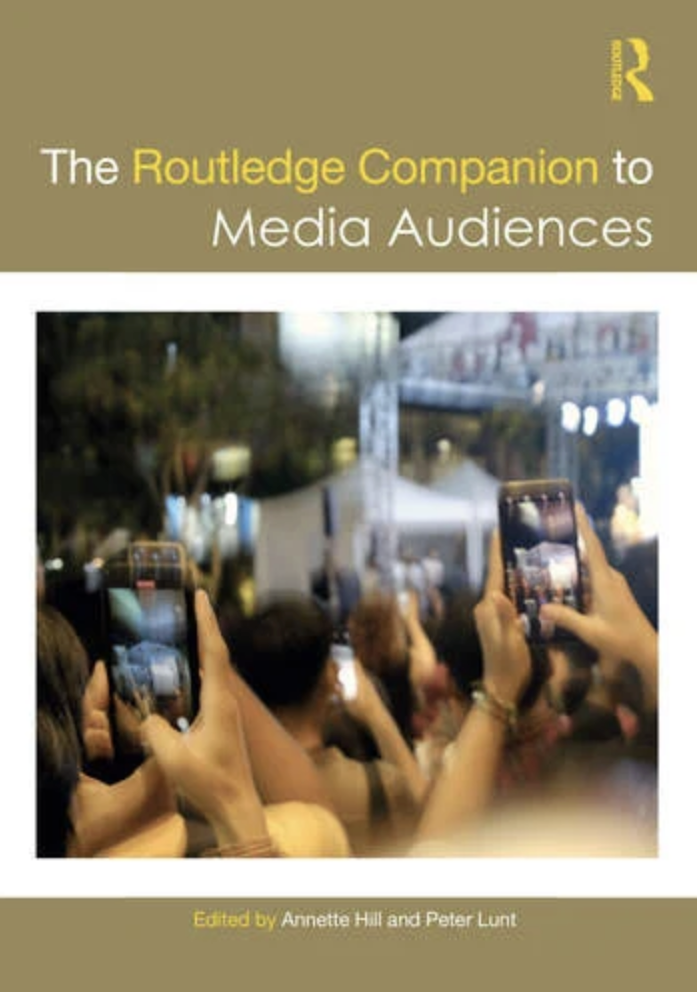
Screenshot 2024-09-17 at 20.05.56The Routledge Companion to Media Audiences edited by Annette Hill and Peter Lunt is just out, or at least on preorder. The massive whopper includes my bit, titled “Bored audiences: Zoned in and out” which addresses casual gaming as oscillations of interest and boredom in order to consider these concepts on less binary terms. The abstract goes like this:
As affective flatness entailing a sense of stuckness in the present, boredom is routinely cast as the conceptual and experiential opposite of interest indicative of the richness of experience. Taking a different analytical route, this chapter makes an argument for considering boredom and interest in dynamic relation with one another as oscillations in affective intensity. It further calls for adding nuance into what boredom actually means by addressing the dynamics of casual gameplay in the context of the limitations on mobility and stimulus caused by the COVID-19 pandemic lockdowns. Characterised by mass appeal, short play sessions, clear rules, and ease of play, casual games are repetitive, and hence potentially boring, while also routinely used as escapes from boredom, and for filling up time. Starting with conceptualisations of boredom as a modern phenomenon, as the conceptual and experiential opposite of interest indicative of the richness of experience, and as a problem endemic to the attention economies of app culture, this chapter asks what the notion means in the current conjuncture of ubiquitous connectivity and mediated engagement. Through a discussion of casual gaming, it sets out to add nuance to what boredom stands for, and how it becomes diagnosed. Deploying ambiguity as an analytical lens, the chapter then addresses boredom as fluctuating rhythms of experience yielding languor, both pleasurable and very much not.

Leave a comment

Filed under academic pleasures, affect theory, cultural studies, media studies

sex at the borders / Monsieur Mosse

The special issue Sex at the Borders: Queering Transnational Histories that we edited for lambda nordica with Jenny Sundén and Katrin Tiidenberg, is just out, with great articles exploring lesbian networking across the Baltic Sea, smut peddling in Hälle, Sweden, as well as perceptions of Swedish homosexuality in Finland. All on OA! Plus issue also includes our article with Mari Pajala, Monsieur Mosse: A Bad Gay? Queer Celebrity in Finnish Print Media, 1960s to 1980s. The abstract goes like this:

Raimo Jääskeläinen, better known as Monsieur Mosse (1932–1992), was a hairdresser, makeup artist, gossip columnist, convicted blackmailer, and Finland’s first out gay male celebrity. The topic of endless articles, befriending and falling out with beauty queens and fashion models, publishing a tell-all memoir elaborating on his taste for luxury, working for straight porn magazines and briefly editing one, Mosse was both the subject and object of popular media and, in his flamboyance, a key domestic celebrity figure of the 1970s and 1980s. Meanwhile, his relationship with the gay rights movement was frictional at best in that his brand was considered “dishonorable” vis-à-vis liberatory politics. Building on media historical inquiry and taking cue from Huw Lemmey and Ben Miller’s (2022) popular argument for studying “bad gays” – historical figures not fitting aspirational and inspirational narratives of queer activism and agency – this article examines Mosse’s trajectory as a celebrity, focusing especially on his 1980s collaborations with the sex press. We argue that Mosse’s particular brand of shameless extravagance and candid gossiping knowingly operationalized “badness” as a vehicle of distinction and visibility in a largely homophobic national context.

Leave a comment

Filed under academic pleasures, media history, sexuality

objectionable nipples

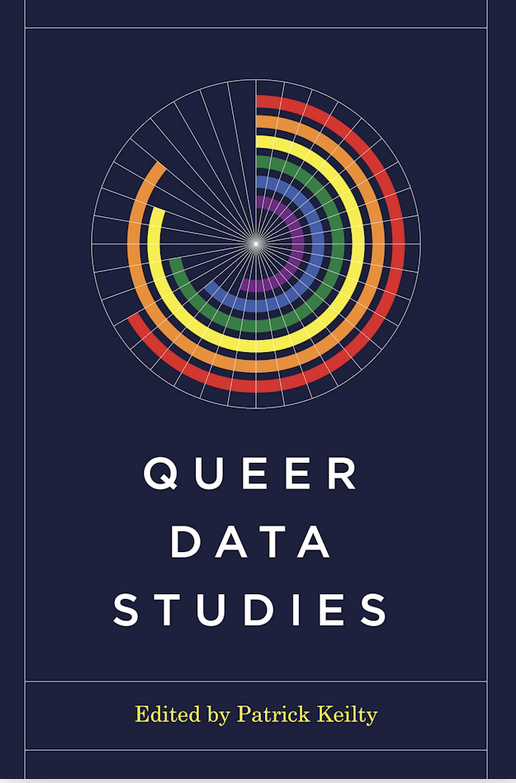
Screenshot 2024-03-01 at 16.16.27Our chapter with the marvelous Jenny Sundén, “Objectionable nipples: Puritan data politics and sexual agency in social media,” is newly out in Queer Data Studies edited by Patrick Keilty for University of Washington Press’ Feminist Technosciences series. As the title suggests, we are intrested in the politics of nipples in a context where nudity and sexual content are aggressively and horizontally deplatformed on leading social media platforms, also attending to Puritan underpinnings of content policies and the unwillingness of “free the nipple” activism to address sexual desire.
Leave a comment

Filed under academic pleasures, data culture, feminist media studies, NSFW, sexuality

Iiu Susiraja

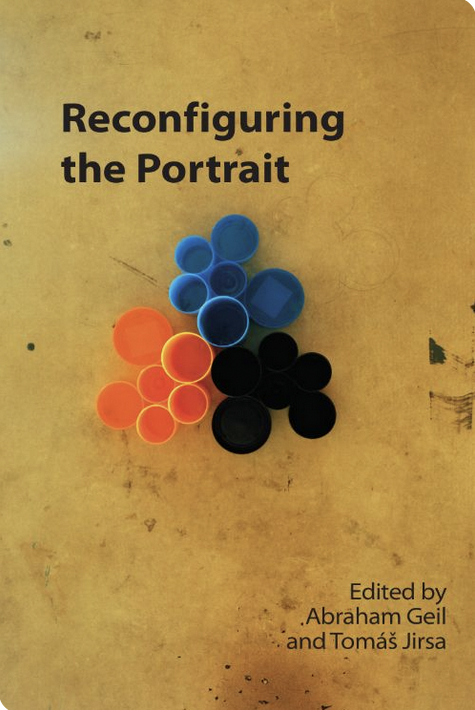
Screenshot 2023-11-10 at 13.54.45Reconfiguring the Portrait, edited by Abraham Gell and Tomáš Jirsa, is freshly out from Edinburgh University Press. It includes my co-authored chapter with Kaisu Hynnä-Granberg, titled Iiu Susiraja: self-shooting as playful practice. Focusing on the Instagram presence of the Finnish artist Iiu Susiraja in particular, our chapter explores the playful aspects of her work while also engaging in relations between self-portraits and selfies, body aesthetics, and the critical edge of ambiguity. The piece was a joy to write and we hope it does some justice to the general mood of Susiraja’s art.

Leave a comment

Filed under academic pleasures, feminist media studies, humor, play

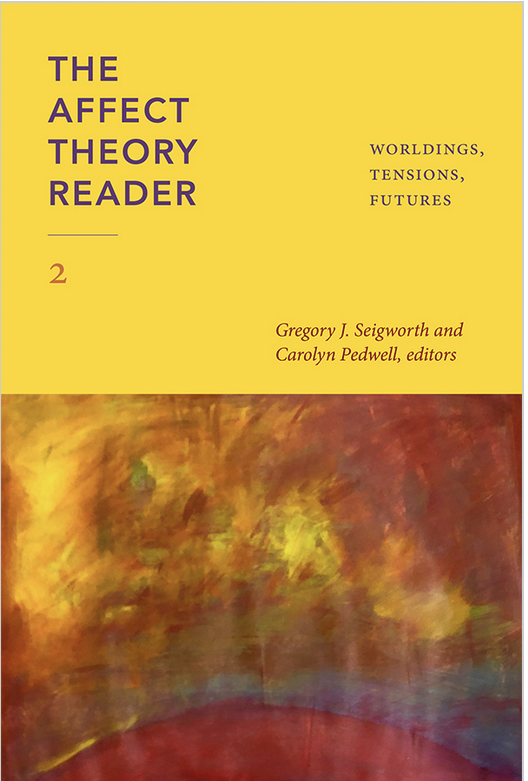
the affect theory reader 2/WTF

Screenshot 2023-09-29 at 13.22.33

The Affect Theory Reader II: Worldings, Tensions, Futures, edited by Gregory J. Seigworth and Carolyn Pedwell  for Duke UP, is just out. Quite the whopper, with contributions from Lauren Berlant, Kathleen Stewart, Lisa Blackman, Ann Cvetkovich, Jasbir K. Puar, Erin Manning Adam Frank and Elizabeth A. Wilson, and a whole bunch of others. My piece, titled “Ambiguous affect: excitements that make the self” makes an argument for the critical edge of ambiguity in the context of data culture aiming to aggregate and analyse feeling similarly to any other user data. Writing it, I got very stuck at one point and Greg and Carolyn exemplified academic generosity in helping me become un-stuck. Kudos.

Leave a comment

Filed under academic pleasures, affect theory, data culture

interview on affect and ambiguity

The new issue of MAST is out, edited by Tony D. Sampson & Jernej Markelj: it also includes an interview that Jernej and Claudio Celis Bueno did with me, titled “Ambiguity and Affect in Digital Culture“. This took quite a bit of thinking and the kind of retrospection I seldom do: quite the pleasure!

Leave a comment

Filed under academic pleasures, affect theory, data culture

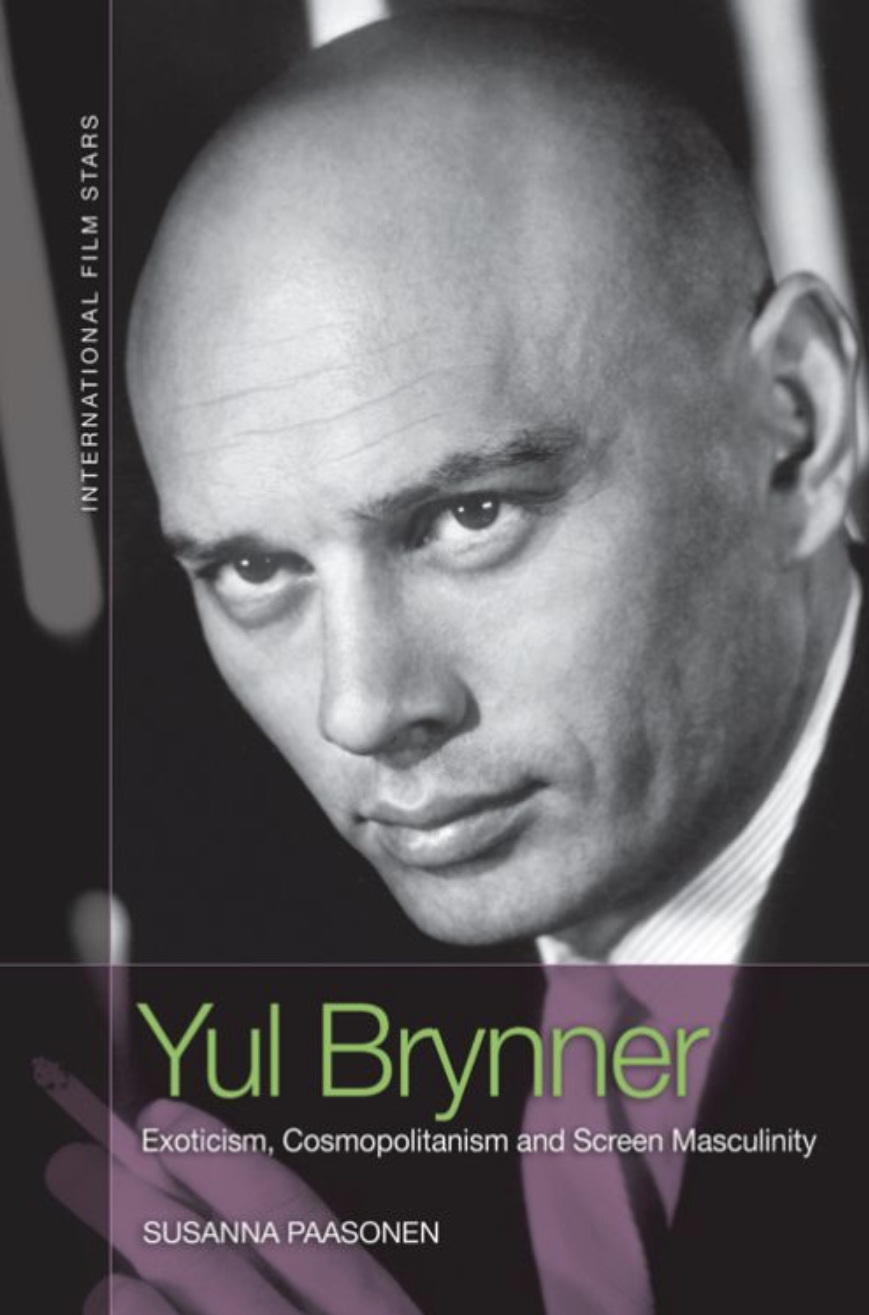
Yul is out, out in the world!

Screenshot 2022-09-08 at 16.59.53My pandemic refuge project, Yul Brynner: Exoticism, Cosmopolitanism and Screen Masculinity, is very freshly out. A Yul project was something I toyed with for years before eventually penning an article (out in Screen in 2019); without COVID-19 lockdowns, it is unlikely that I could have found the time for the kind of archival work that this book took. Trust me on this: both immersive and extensive.

It has been a pleasure to work with Edinburgh University Press and the editors of the International Film Stars series on this. Having opened the book on many a page by now, I have not noticed a typo yet. A personal first. A more affordable paperback version should be out in 2024; the 30% discount code NEW30 for the HB one may or may not still work.

Leave a comment

Filed under academic pleasures, media history