
Ever wondered about the local markets for gay print pornography in 1980s Finland? Well, I have, as has Mari Pajala. Our article “Gay Porn, Politics and Lifestyle in 1980s Finland: The Short Life of Mosse Magazine” is just out with Nora – Nordic Journal of Feminist and Gender Research, with free eprint available through this link. And here’s the abstract:
Although the gay press has been seen as central to the formation of the gay movement, entertainment magazines focusing on sex and consumer lifestyle have until recently received little attention in studies on gay history. This article focuses on Mosse, the short-lived gay porn magazine published by mainstream publishing company Lehtimiehet in Finland between 1983 and 1985. In addition to nude photos and porn stories, Mosse featured articles on gay politics and lifestyle. Analysing Mosse’s attempt at creating a market for a new kind of gay magazine, the article explores the relationship between commercialism, porn and gay politics in Mosse. The article argues that Mosse, alongside other porn publications, explored themes of gay liberation and gay consumer culture at a time when the discussion of gay issues was limited in so-called legitimate media in Finland, in part due to legislation which criminalized the “encouragement” of homosexuality. In its articles on gay politics and lifestyle, Mosse positioned Finland as lagging behind Western countries, with Sweden and Denmark figuring as ideals of progress. Despite its modest circulation and short lifespan, Mosse’s very existence is significant as a sign that it was possible to imagine a Finnish gay consumer market in the first part of the 1980s.
 Out a year ago, Many Splendored Things is being read by game scholars, which is fantastic. Adding to the thrill, some of them like it. Recent reviews are out from
  An excerpt from our new book with Kylie Jarrett and Ben Light,
 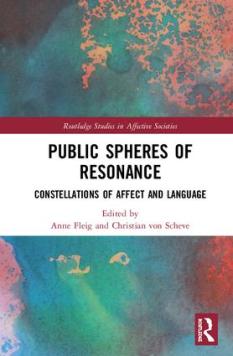 Edited by Anne Fleig and Christian von Scheve, Public Spheres of Resonance: Constellations of Affect and Language, is out with Routledge. It has a fabulous lineup, from Anna Gibbs to Britta Timm Knudsen and Ann Cvetkovich. And me! My contribution is titled “Resonant Networks: On Affect and Social Media” and, well, asks how the concept of resonance may work in studies of social media. This is the intro/abstract:
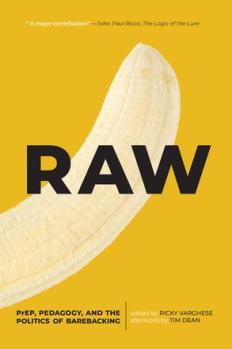 Edited by the one and only Ricky Varghese, and in the making for quite a while, RAW: PrEP, Pedagogy, and the Politics of Barebacking is freshly out from University of Regina Press. It includes “Strange optimism: Queer rage as visceral ethics”, my exchange with Paul Morris of Treasure Island Media looking at how the notion of ethics might map onto their production practices and Paul’s career in pornography more generally. I continue to believe that we need more dialogue with people producing the objects we study, are we to better understand how they perceive the significance, context and purpose of it all. Working with Paul is always surprising and pleasurable – and of course this book has the best cover.
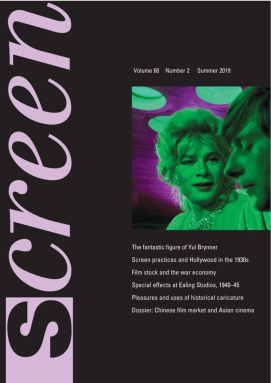 In my much younger years, I was trained as a film scholar. Even before that, I had a fascination for Yul Brynner’s star image. While I more rarely work on film these days, the Yul fascination has never gone away. Two years ago, I wrote some of this up in an article that’s just out with
  Writing up my fifth journal article review this month, and having received many a review during my years in the academia, some observations. Nobody asked for these, but it’s been that kind of a week.
 Yes, some reviews seem and are unfair, but this is not my point here. It is only once that I have felt my own article/chapter grow weaker with revisions, making it less than one percent of the reviewed stuff I’ve published to date. A review may seem off but that can also be indicative of how the manuscript reads to someone else, basically making evident the author’s shortcomings in communicating the point they want to make.
 Second, just please with the reviewer 2 stuff. I am a paradigmatic reviewer 2 in that I do not hesitate to reject manuscripts or suggest extensive revisions. This is what reviewers are for: we create distinctions between articles since all should, will and cannot be published as they are (or at all). Sometimes the manuscript isn’t there yet, sometimes it doesn’t quite make sense and sometimes it’s just not a very good fit for the journal. Especially in journals enjoying an avalanche of incoming manuscripts, it is no great favor to the author, the editors or other reviewers to suggest “revise and resubmit” just to have the manuscript be caught in that loop and, possibly after a few rounds, be rejected.
 Third, a review may want to avoid 1) telling the author to make use of the reviewer’s own work, unless there’s no way around this; 2) saying that something “has to” or “needs to” be done, for nobody likes to be dictated to when it comes to our own research; 3) rejecting the work without spelling out what the issues are; or 4) venting their own antipathies or resentments concerning the person, the field of study or the methodological/theoretical approach applied.
 Susanna Paasonen