

Category Archives: data culture

absurdity, Twitter comedy, and humor bots

It is no breaking news that, in internet research, things very quickly become recent history. Especially when it comes to handbooks that take some years to put together. Hence, behold!, our chapter with the excellent Jenny Sundén on Twitter’s (now X) humor bots (out of operation since 2023) for The Oxford Handbook of Screen Comedy edited by Peter C. Kunze and William V. Constanzo. The abstract goes like this:

This chapter explores the world of Twitter bots (on the verge of Elon Musk’s rebranding and decision to charge for the platform’s API) from a particular angle: that of absurd humor. It builds on and advances discussions of absurd humor in general—and feminist and queer humor and absurdity in particular—by studying Twitter bots as part of a landscape where absurd humor is generated in algorithmic assemblages of human imagination and nonhuman repetition and randomness. It explores a strategic selection of humorous Twitter bot accounts, combined with background interviews with two of their creators, operating with slightly different logics: Gender of the day (@genderoftheday), which generated imaginative, poetic, and charmingly nonsensical takes on what the gender of the day could be when capaciously envisioned; a bookish kind of humor generated by Victorian queerbot (@queerstreet), which scoured digitized nineteenth-century novels for the terms “gay” and “queer”; and the eerie flora and fauna coined by the fabulously surrealist poetry bot British Gardens (@GardensBritish). The absurd represents the opposite of reason, rationality, and meaning, as its etymological Latin root, absurdus (“out of tune, uncouth, inappropriate, ridiculous”), suggests. Following this semantic route, absurd humor is out of harmony with reason and notions of decency. The chapter focuses on what happens to such incongruity when it involves not only people but algorithms, and what may be learned about the pleasures of repetition, randomness, and surprise and the minor mundane affective lifts this affords by studying the bots’ output.
Leave a comment

Filed under academic pleasures, data culture, humor, internet research, media studies

in/conveniences

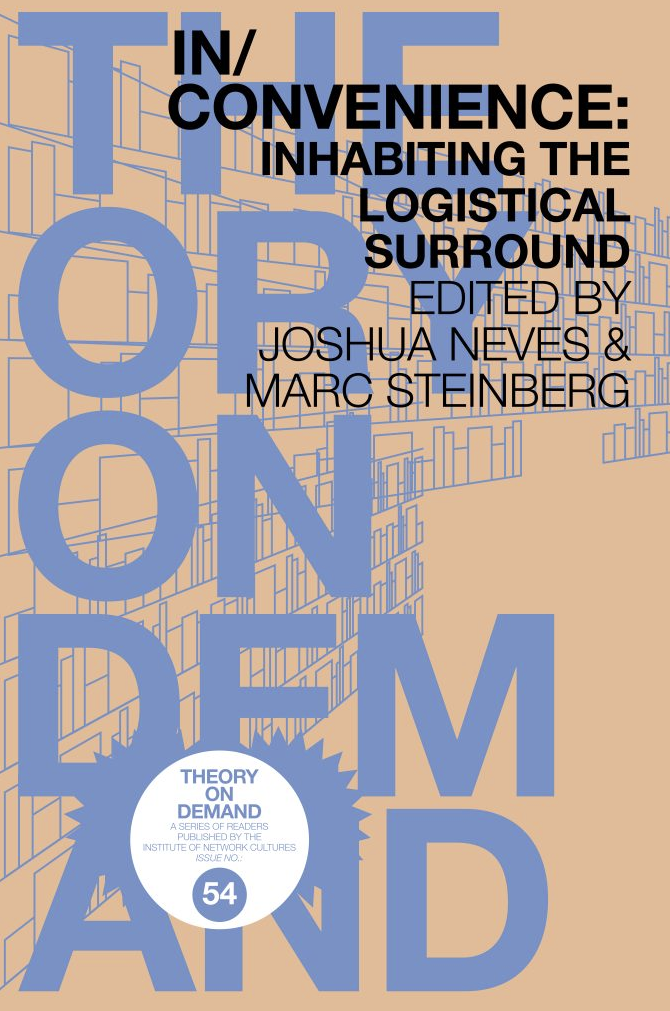
Screenshot 2024-11-27 at 17.54.40In/Convenience: Inhabiting the Logistical Surround edited Joshua Neves and Marc Steinberg is out just now with the Insititute of Network Cultures’ Theory on Demand series. The collection covers a lot of ground and also includes my bit, “Platform economies, reputational stains, and the in/conveniences of porn”, a Lauren Berlant-inspired essay on porn’s current financial deplatforming and the moral platform imaginaries that this involves. All on open access!
Leave a comment

Filed under affect theory, data culture, feminist media studies, internet research, sexuality

objectionable nipples

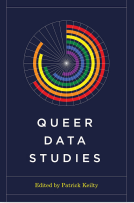
Screenshot 2024-03-01 at 16.16.27Our chapter with the marvelous Jenny Sundén, “Objectionable nipples: Puritan data politics and sexual agency in social media,” is newly out in Queer Data Studies edited by Patrick Keilty for University of Washington Press’ Feminist Technosciences series. As the title suggests, we are intrested in the politics of nipples in a context where nudity and sexual content are aggressively and horizontally deplatformed on leading social media platforms, also attending to Puritan underpinnings of content policies and the unwillingness of “free the nipple” activism to address sexual desire.

Leave a comment

Filed under academic pleasures, data culture, feminist media studies, NSFW, sexuality

cursed tweets

After quite a rocky history of rejects and revisions, our article with Elena Pilipets, Memetic commenting: Armenian curses and the Twitter theatre of Trump’s deselection, is out with The International Journal of Cultural Studies. Nice and quirky. With an abstract that goes like this:

On 7 November 2020, strange things were happening in the comments to @realDonaldTrump’s tweet erroneously arguing that he had won the US presidential election, ‘BY A LOT’. Posting quote tweets and replies in Armenian in tandem with ‘cursed images’, memes, and creepypasta, users engaged in a spam-like trollish intervention, even as Twitter kept removing the said content in real time. Exploring this online incident through various analytical techniques, this article first attends to absurdity and ephemerality within the polarized social media event. Second, it makes an argument for the productivity of digital methods in cultural studies inquiry aiming to understand the temporal, contextual, and infrastructural aspects of memetic commenting. Third, by focusing on the social (media) theatre of Armenian curses, we make a case for the analytical importance of studying materials deemed niche and anomalous in networked exchanges.

Leave a comment

Filed under cultural studies, data culture, internet research

intimate infrastructures

An essay we did jointly with the IDA research team is freshly out with Media Theory’s special section edited by Carolyn Pedwell and Simon Dawes, “Lauren Berlant and Media Theory” (OA). Authored by Vilja Jaaksi, Anu Koivunen, Kaarina Nikunen, Karoliina Talvitie-Lamberg, Annamari Vänskä and myself, the piece is titled “Intimate infrastructures we depend upon: Living with data” and the abstract goes likes this:

This essay takes on Lauren Berlant’s mapping of intimacy as ‘connections that impact on people, and on which they depend for living’ in order to address attachments, dependencies, and vulnerabilities in datafied contexts where digital platforms operate as infrastructures of everyday life. Building on interview material, we explore such intimate attachments as ones rife with friction and inconvenience, asking how vulnerabilities emerge and become differently distributed among our study participants. We argue that thinking about the datafied everyday in terms of intimacy opens up space for considering the fundamental ambiguities involved in what matters to people, what they are attached to, and what they simply need to live with. We further suggest that attending to the complexity and vitality of mundane relating, impacting, and world-making offers ways of exploring techno-capitalist infrastructures of data extraction and mass surveillance in tandem with other attachments and connections that bind, and matter.

Leave a comment

Filed under data culture, internet research, intimacy, media studies

vanilla normies and fellow pervs

Our article with Katrin Tiidenberg, Jenny Sundén and Maria Vihlman is out today on OA with Sexualities. Vanilla normies and fellow pervs: Boundary work on sexual platforms continues our study of local sexual platforms within the Rethinking Sexuality and Intimacy in Data-Driven Culture projects, paving way for our book on the topic currently under contract with MITP. The abstract goes like this:

Building on a study of three Nordic and Baltic digital sexual platforms, this article analyzes the perceptions of enjoyable sex and sexual belonging among 60 people, who self-identify as sexually liberal. In dialogue with Gayle Rubin’s formative work on sexual hierarchies and “good sex,” we explore our participants’ complex and often ambiguous sexual boundary work to delineate liberated sex. Independent of particular preferences (non-monogamy, BDSM, fetishism, and exhibitionism), liberated sex for our participants is definitionally enjoyable and articulated via an aspirational hierarchy based on willingness, diversity/variability, and self-reflexivity—partly set against national sexual imaginaries of vanilla normalcy, yet allowing vanilla some gradations and nuances.

Leave a comment

Filed under data culture, feminist media studies, internet research, media studies, sexuality

the affect theory reader 2/WTF

Screenshot 2023-09-29 at 13.22.33

The Affect Theory Reader II: Worldings, Tensions, Futures, edited by Gregory J. Seigworth and Carolyn Pedwell  for Duke UP, is just out. Quite the whopper, with contributions from Lauren Berlant, Kathleen Stewart, Lisa Blackman, Ann Cvetkovich, Jasbir K. Puar, Erin Manning Adam Frank and Elizabeth A. Wilson, and a whole bunch of others. My piece, titled “Ambiguous affect: excitements that make the self” makes an argument for the critical edge of ambiguity in the context of data culture aiming to aggregate and analyse feeling similarly to any other user data. Writing it, I got very stuck at one point and Greg and Carolyn exemplified academic generosity in helping me become un-stuck. Kudos.

Leave a comment

Filed under academic pleasures, affect theory, data culture

interview on affect and ambiguity

The new issue of MAST is out, edited by Tony D. Sampson & Jernej Markelj: it also includes an interview that Jernej and Claudio Celis Bueno did with me, titled “Ambiguity and Affect in Digital Culture“. This took quite a bit of thinking and the kind of retrospection I seldom do: quite the pleasure!

Leave a comment

Filed under academic pleasures, affect theory, data culture

kinky, leaky, opaque

A column that was very much fun to write: Kinky, Leaky, Opaque: Sexual Intimacies and Data for ACM’s Interactions with the marvelous Jaz Hee-jeong Choi, and with an illustration from Martyne Miller. Starts with an anecdote of me showing Jaz a visual example of sneaker fucking over dinner (classy) and thinks through technology, sex and domestic space.

Leave a comment

Filed under academic pleasures, data culture, sexuality

locating sex

Locating Sex: Regional Geographies of Sexual Social Media, the first article on our study of Swedish, Estonian and Finnish sexual platforms with Jenny Sundén, Katrin Tiidenberg and Maria Vihlman, is out on OA with Gender, Place & Culture. This is a collab between the Rethinking Sexuality project and the IDA consortium, with more to follow. Here’s the abstract:

Contributing to the field of the geographies of digital sexualities, this article explores the geosocial dimensions of digital sexual cultures by analyzing three regionally operating, linguistically specific social media platforms devoted to sexual expression. Drawing on case studies of an Estonian platform used primarily for group sex, a Swedish platform for kink and BDSM, and a Finnish platform for nude self-expression, we ask how these contribute to and shape sexual geographies in digital and physical registers. First, we focus on the platforms as tools for digital wayfinding and hooking up. Second, we consider how the platforms help to reimagine and sexualize physical locations as ones of play, and how this transforms the ways of inhabiting such spaces. Third, we analyze how the platforms operate as sexual places in their own right, designed to accommodate certain forms of display, relating, and belonging. We argue, in particular, that these platforms shape how users imagine and engage with location by negotiating notions of proximity and distance, risk and safety, making space for sexual sociability. We approach geographies of sexuality both through the regional and linguistic boundaries within which these platforms operate, as well as through our participants’ sense of comfort and investment in local spaces of sexual play. As sexual content is increasingly pushed out of large, U.S.-owned social media platforms, we argue that locally operating platforms provide a critical counterpoint, allowing for a vital re-platforming of sex on a regional level.

Leave a comment

Filed under data culture, feminist media studies, internet research, NSFW, sexuality