Category Archives: sexuality

hot connections

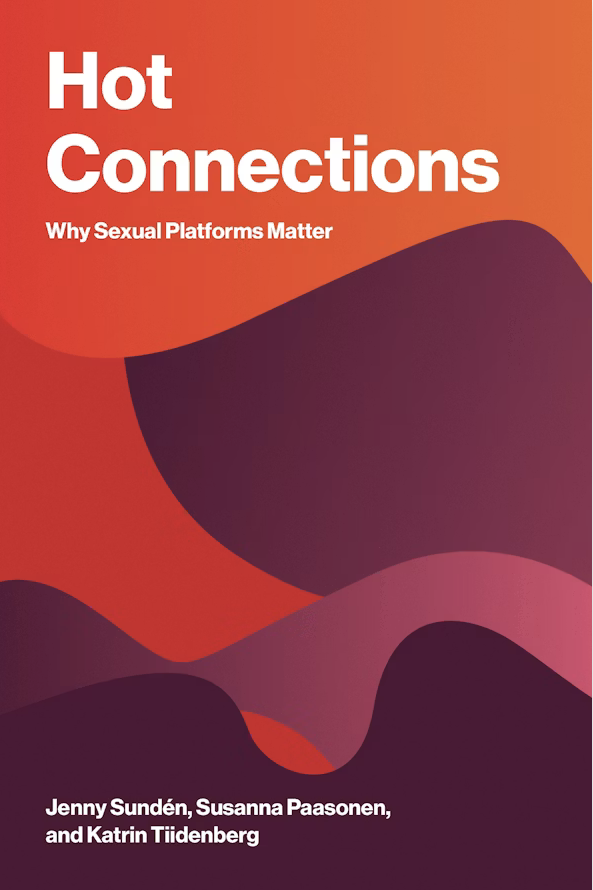
Our book, Hot Connections: Why Sexual Platforms Matter, coauthored with Jenny Sundén and Katrin Tiidenberg, will be out in March on open access with the MIT Press: very exciting conclusion to what has been such an enjoyable collaboration within the Rethinking Sexuality project. As has been the case with my previous books with the publisher, the cover design is fabulous. This is the summary:

A rethinking of “the social” in social media which includes the sexual.

What can we learn from including sexual platforms in definitions of social media and, by extension, from including sex in definitions of “the social” itself? Hot Connections explores three locally operating sexual platforms: the Swedish Darkside, used by kink and BDSM practitioners; the Estonian Libertine Center, used mainly by nonmonogamous people; and the Finnish Alastonsuomi, used for a wide variety of nude and sexual displays of self-expression. What avenues do these platforms open for understanding the role that sexuality plays in people’s networked routines, social bonds, and forms of relating?

Sexual social media affords freedom of worldmaking, belonging, and a right to sexually exist. While providing vital spaces for sexual self-expression—and indeed, hot connections—platform connectivity also involves friction as expectations, wishes, and desires clash and collide.

Intervening in debates on the value of sexual social media, Hot Connections discusses what it means to research sexuality when sexual data is understood as sensitive by default, what platform governance may look like if viewed from the margins, and how sex and intimacy are not the same thing in networked sexuality.
Leave a comment

Filed under academic pleasures, feminist media studies, internet research, NSFW, sexuality

a roundtable on the future of porn studies

Our roundtable discussion, Shaping Pleasure, Shifting Boundaries: A Roundtable on the Future of Porn Studies with Peter Alilunas, João Florêncio, Angela Jones and myself, is out as part of Porn Studies journal’s tenth anniversary thingie. And this is the abstract:

The roundtable, ‘Shaping Pleasure, Shifting Boundaries: A Roundtable on the Future of Porn Studies,’ took place in June 2024 via Zoom and was recorded, transcribed and then edited to cut digressions and repetitions for publication. The roundtable was intended to examine the transformative trajectory of porn studies over the last decade. With a focus on technological innovations, ethical challenges, and the labour dynamics reshaping the field, the following discussion explores how intersectionality and diverse methodologies have broadened perspectives within porn studies. Our participants also talked about the rise of platforms like OnlyFans, the impact of archival gaps, and the continuing critical tension between pleasure and danger in academic and cultural narratives. Their conversation underscores the necessity of rethinking traditional paradigms while advocating for inclusivity and the preservation of pornographic histories as part of broader cultural heritage. This conversation sets the stage for envisioning the discipline’s future as it navigates a rapidly evolving sociopolitical and technological landscape.

Leave a comment

Filed under academic pleasures, media studies, NSFW, porn studies, sexuality

in/conveniences

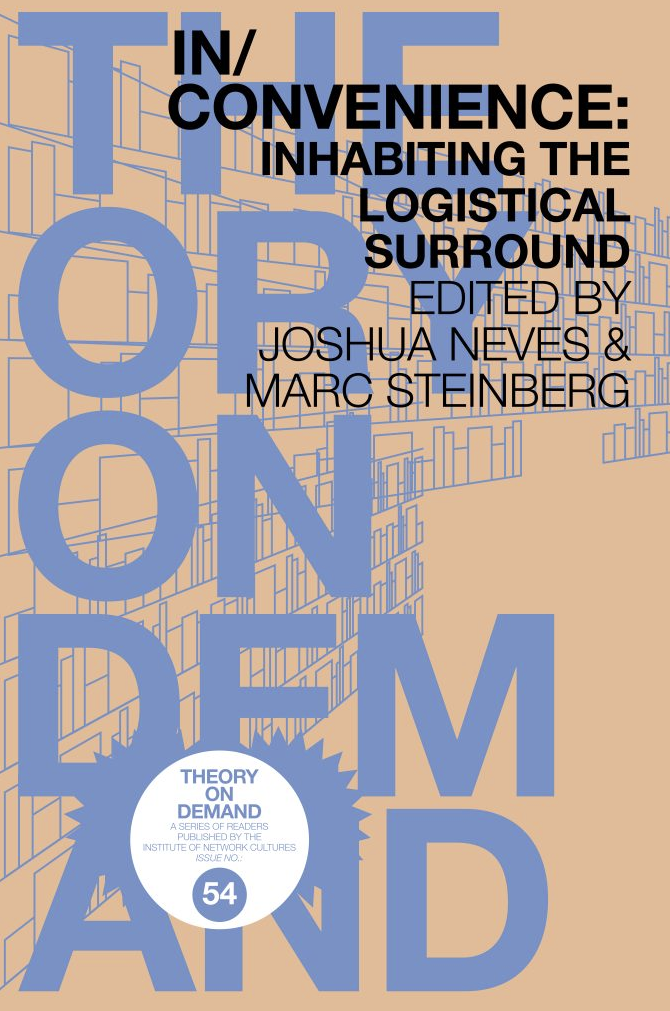
Screenshot 2024-11-27 at 17.54.40In/Convenience: Inhabiting the Logistical Surround edited Joshua Neves and Marc Steinberg is out just now with the Insititute of Network Cultures’ Theory on Demand series. The collection covers a lot of ground and also includes my bit, “Platform economies, reputational stains, and the in/conveniences of porn”, a Lauren Berlant-inspired essay on porn’s current financial deplatforming and the moral platform imaginaries that this involves. All on open access!
Leave a comment

Filed under affect theory, data culture, feminist media studies, internet research, sexuality

sex at the borders / Monsieur Mosse

The special issue Sex at the Borders: Queering Transnational Histories that we edited for lambda nordica with Jenny Sundén and Katrin Tiidenberg, is just out, with great articles exploring lesbian networking across the Baltic Sea, smut peddling in Hälle, Sweden, as well as perceptions of Swedish homosexuality in Finland. All on OA! Plus issue also includes our article with Mari Pajala, Monsieur Mosse: A Bad Gay? Queer Celebrity in Finnish Print Media, 1960s to 1980s. The abstract goes like this:

Raimo Jääskeläinen, better known as Monsieur Mosse (1932–1992), was a hairdresser, makeup artist, gossip columnist, convicted blackmailer, and Finland’s first out gay male celebrity. The topic of endless articles, befriending and falling out with beauty queens and fashion models, publishing a tell-all memoir elaborating on his taste for luxury, working for straight porn magazines and briefly editing one, Mosse was both the subject and object of popular media and, in his flamboyance, a key domestic celebrity figure of the 1970s and 1980s. Meanwhile, his relationship with the gay rights movement was frictional at best in that his brand was considered “dishonorable” vis-à-vis liberatory politics. Building on media historical inquiry and taking cue from Huw Lemmey and Ben Miller’s (2022) popular argument for studying “bad gays” – historical figures not fitting aspirational and inspirational narratives of queer activism and agency – this article examines Mosse’s trajectory as a celebrity, focusing especially on his 1980s collaborations with the sex press. We argue that Mosse’s particular brand of shameless extravagance and candid gossiping knowingly operationalized “badness” as a vehicle of distinction and visibility in a largely homophobic national context.

Leave a comment

Filed under academic pleasures, media history, sexuality

objectionable nipples

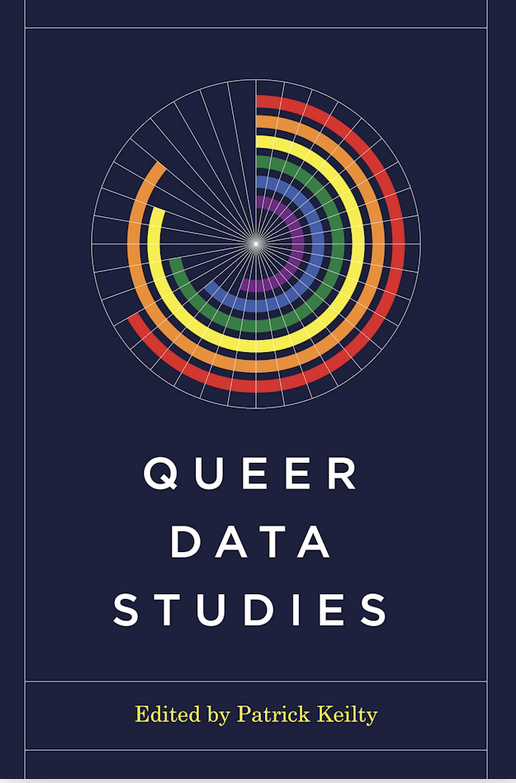
Screenshot 2024-03-01 at 16.16.27Our chapter with the marvelous Jenny Sundén, “Objectionable nipples: Puritan data politics and sexual agency in social media,” is newly out in Queer Data Studies edited by Patrick Keilty for University of Washington Press’ Feminist Technosciences series. As the title suggests, we are intrested in the politics of nipples in a context where nudity and sexual content are aggressively and horizontally deplatformed on leading social media platforms, also attending to Puritan underpinnings of content policies and the unwillingness of “free the nipple” activism to address sexual desire.

Leave a comment

Filed under academic pleasures, data culture, feminist media studies, NSFW, sexuality

shifty meanings

My short article, Dick pics and the shifty meanings of porn, is freshly out with Porn Studies, and will be part of the journal’s tenth anniversary issue later this spring. The abstract goes like this:

Dick pics are ubiquitous objects in social media shared for the purposes of harassment, flirtation, suggestion, amusement, and titillation alike. Starting with the question of how dick pics are, or are not classifiable as porn, this article opens up lines of inquiry on the possibilities and limitations of porn as a genre marker, content classifier, and reference point in and for understanding sexual content distributed through networked means. In the contemporary moment when sexual content continues to multiply online even as most social media platforms vigilantly moderate and remove it, scholarly vocabularies risk either lagging behind or posing normative categorisation on the things published and shared, from dick pics to webcam shows and OnlyFans content. This article calls for contextual care in how the notion of porn becomes applied to networked sexual media, the shapes of continue to morph, as well as in how dick pics are made sense of as communication devices and cultural symbols.

Leave a comment

Filed under porn studies, sexuality

vanilla normies and fellow pervs

Our article with Katrin Tiidenberg, Jenny Sundén and Maria Vihlman is out today on OA with Sexualities. Vanilla normies and fellow pervs: Boundary work on sexual platforms continues our study of local sexual platforms within the Rethinking Sexuality and Intimacy in Data-Driven Culture projects, paving way for our book on the topic currently under contract with MITP. The abstract goes like this:

Building on a study of three Nordic and Baltic digital sexual platforms, this article analyzes the perceptions of enjoyable sex and sexual belonging among 60 people, who self-identify as sexually liberal. In dialogue with Gayle Rubin’s formative work on sexual hierarchies and “good sex,” we explore our participants’ complex and often ambiguous sexual boundary work to delineate liberated sex. Independent of particular preferences (non-monogamy, BDSM, fetishism, and exhibitionism), liberated sex for our participants is definitionally enjoyable and articulated via an aspirational hierarchy based on willingness, diversity/variability, and self-reflexivity—partly set against national sexual imaginaries of vanilla normalcy, yet allowing vanilla some gradations and nuances.

Leave a comment

Filed under data culture, feminist media studies, internet research, media studies, sexuality

kinky, leaky, opaque

A column that was very much fun to write: Kinky, Leaky, Opaque: Sexual Intimacies and Data for ACM’s Interactions with the marvelous Jaz Hee-jeong Choi, and with an illustration from Martyne Miller. Starts with an anecdote of me showing Jaz a visual example of sneaker fucking over dinner (classy) and thinks through technology, sex and domestic space.

Leave a comment

Filed under academic pleasures, data culture, sexuality

Yul on preorder

Screenshot 2022-09-08 at 16.59.53Yul Brynner: Exoticism, Cosmopolitanism and Screen Masculinity is out end of March, and available now on pre-order (30% discount with the code NEW30).

304 pages, 35 b&w images, and an anal amount of historical print sources!

Yul Brynner’s star image was built on cosmopolitan flair, shifting tales of origin, baldness, as well as film roles as foreign rulers, freedom fighters, army officials, gunslingers and secret agents of ever-shifting ethnicities. Whether Cossacks, marauding pirate captains or cross-dressing torch singers, Brynner’s characters were invariably stand-outs.

This book explores his exotic and masculine star image and its transformations from lavish Orientalist Hollywood spectacles of the 1950s to 1960s European co-productions, 1970s action films and scifi. Extensively researched, it covers the actor’s entire film catalogue, his rumoured yet unrealised projects, television work and stage appearances, as well as their international media reception. Thematically organised, the book inquires after racial casting politics, the construction of sex symbols, Brynner’s humanitarian work and the recurring poses and gestures that characterised his performance style.

Leave a comment

Filed under academic pleasures, media history, sexuality

about sex, open-mindedness, and cinnamon buns

Our article with Jenny Sundén, Katrin Tiidenberg and Maria Vihlman, titled “About Sex, Open-Mindedness, and Cinnamon Buns: Exploring Sexual Social Media“, is just out (on OA) with Social Media + Society. It’s the second joint article coming out from our collaborative project on local sexual platforms, with more to come.

And here’s the abstract: General purpose social media platforms—often incited by American legislation—increasingly exclude sex from acceptable forms of sociality in the abstract name of user safety. This article analyzes interview data (four developer interviews and 56 user interviews) from three North European sexual platforms (Darkside, Alastonsuomi, and Libertine.Center) to explore what follows from including sexual sites in definitions and analyses of social media and, by extension, in including sex in definitions of “the social” itself. We found that instead of context collapse, the users and developers of the studied sites operate with what we call context promiscuity, blending boundaries, but maintaining their structural integrity. This allows for a particular silosociality to emerge based on experiences of safety, risk, and consent. Building on this, we propose thinking of sexual expression as something not contained by, but put in motion across platforms, user cultures, content policies, and sexual norms. Rather than framing sexual social media exchanges in terms of their perceived risks and harms, we would do well to also inquire after the risks and harms involved in ousting sex from networked forms of sociality. Deplatforming of sex truncates our ways of understanding what interests, forces, and attachments drive our sociality. Yet, when analyzing social media as if the socio-sexual matters, platforms designed to support sexual displays and connections become vital nodal points in social media ecologies.

Leave a comment

Filed under academic pleasures, cultural studies, feminist media studies, internet research, NSFW, sexuality