
intimate infrastructures

An essay we did jointly with the IDA research team is freshly out with Media Theory’s special section edited by Carolyn Pedwell and Simon Dawes, “Lauren Berlant and Media Theory” (OA). Authored by Vilja Jaaksi, Anu Koivunen, Kaarina Nikunen, Karoliina Talvitie-Lamberg, Annamari Vänskä and myself, the piece is titled “Intimate infrastructures we depend upon: Living with data” and the abstract goes likes this:

This essay takes on Lauren Berlant’s mapping of intimacy as ‘connections that impact on people, and on which they depend for living’ in order to address attachments, dependencies, and vulnerabilities in datafied contexts where digital platforms operate as infrastructures of everyday life. Building on interview material, we explore such intimate attachments as ones rife with friction and inconvenience, asking how vulnerabilities emerge and become differently distributed among our study participants. We argue that thinking about the datafied everyday in terms of intimacy opens up space for considering the fundamental ambiguities involved in what matters to people, what they are attached to, and what they simply need to live with. We further suggest that attending to the complexity and vitality of mundane relating, impacting, and world-making offers ways of exploring techno-capitalist infrastructures of data extraction and mass surveillance in tandem with other attachments and connections that bind, and matter.
Leave a comment

Filed under data culture, internet research, intimacy, media studies

vanilla normies and fellow pervs

Our article with Katrin Tiidenberg, Jenny Sundén and Maria Vihlman is out today on OA with Sexualities. Vanilla normies and fellow pervs: Boundary work on sexual platforms continues our study of local sexual platforms within the Rethinking Sexuality and Intimacy in Data-Driven Culture projects, paving way for our book on the topic currently under contract with MITP. The abstract goes like this:

Building on a study of three Nordic and Baltic digital sexual platforms, this article analyzes the perceptions of enjoyable sex and sexual belonging among 60 people, who self-identify as sexually liberal. In dialogue with Gayle Rubin’s formative work on sexual hierarchies and “good sex,” we explore our participants’ complex and often ambiguous sexual boundary work to delineate liberated sex. Independent of particular preferences (non-monogamy, BDSM, fetishism, and exhibitionism), liberated sex for our participants is definitionally enjoyable and articulated via an aspirational hierarchy based on willingness, diversity/variability, and self-reflexivity—partly set against national sexual imaginaries of vanilla normalcy, yet allowing vanilla some gradations and nuances.

Leave a comment

Filed under data culture, feminist media studies, internet research, media studies, sexuality

Iiu Susiraja

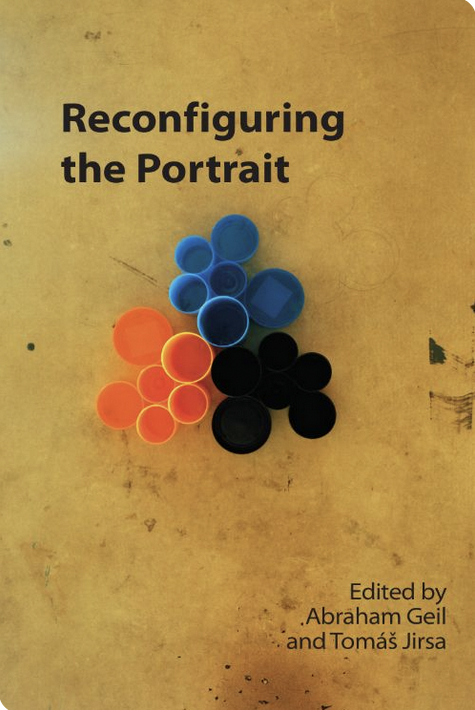
Screenshot 2023-11-10 at 13.54.45Reconfiguring the Portrait, edited by Abraham Gell and Tomáš Jirsa, is freshly out from Edinburgh University Press. It includes my co-authored chapter with Kaisu Hynnä-Granberg, titled Iiu Susiraja: self-shooting as playful practice. Focusing on the Instagram presence of the Finnish artist Iiu Susiraja in particular, our chapter explores the playful aspects of her work while also engaging in relations between self-portraits and selfies, body aesthetics, and the critical edge of ambiguity. The piece was a joy to write and we hope it does some justice to the general mood of Susiraja’s art.

Leave a comment

Filed under academic pleasures, feminist media studies, humor, play

the affect theory reader 2/WTF

Screenshot 2023-09-29 at 13.22.33

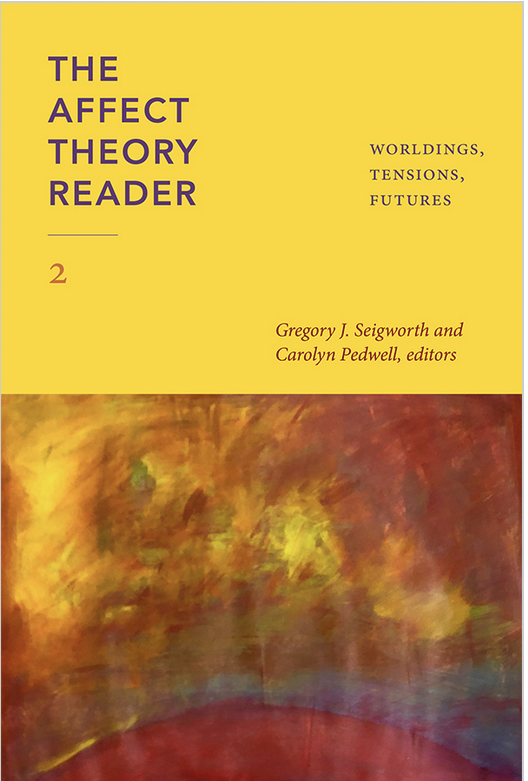
The Affect Theory Reader II: Worldings, Tensions, Futures, edited by Gregory J. Seigworth and Carolyn Pedwell  for Duke UP, is just out. Quite the whopper, with contributions from Lauren Berlant, Kathleen Stewart, Lisa Blackman, Ann Cvetkovich, Jasbir K. Puar, Erin Manning Adam Frank and Elizabeth A. Wilson, and a whole bunch of others. My piece, titled “Ambiguous affect: excitements that make the self” makes an argument for the critical edge of ambiguity in the context of data culture aiming to aggregate and analyse feeling similarly to any other user data. Writing it, I got very stuck at one point and Greg and Carolyn exemplified academic generosity in helping me become un-stuck. Kudos.

Leave a comment

Filed under academic pleasures, affect theory, data culture

interview on affect and ambiguity

The new issue of MAST is out, edited by Tony D. Sampson & Jernej Markelj: it also includes an interview that Jernej and Claudio Celis Bueno did with me, titled “Ambiguity and Affect in Digital Culture“. This took quite a bit of thinking and the kind of retrospection I seldom do: quite the pleasure!

Leave a comment

Filed under academic pleasures, affect theory, data culture

Yul is out, out in the world!

Screenshot 2022-09-08 at 16.59.53My pandemic refuge project, Yul Brynner: Exoticism, Cosmopolitanism and Screen Masculinity, is very freshly out. A Yul project was something I toyed with for years before eventually penning an article (out in Screen in 2019); without COVID-19 lockdowns, it is unlikely that I could have found the time for the kind of archival work that this book took. Trust me on this: both immersive and extensive.

It has been a pleasure to work with Edinburgh University Press and the editors of the International Film Stars series on this. Having opened the book on many a page by now, I have not noticed a typo yet. A personal first. A more affordable paperback version should be out in 2024; the 30% discount code NEW30 for the HB one may or may not still work.

Leave a comment

Filed under academic pleasures, media history

kinky, leaky, opaque

A column that was very much fun to write: Kinky, Leaky, Opaque: Sexual Intimacies and Data for ACM’s Interactions with the marvelous Jaz Hee-jeong Choi, and with an illustration from Martyne Miller. Starts with an anecdote of me showing Jaz a visual example of sneaker fucking over dinner (classy) and thinks through technology, sex and domestic space.

Leave a comment

Filed under academic pleasures, data culture, sexuality

Finnish print smut

Our short piece with Laura Saarenmaa, titled “Local Flavour, Film Fantasies and Shifting Selections: Finnish Sex Magazines, 1972–1973”, is freshly out with Porn Studies. This is the link to free e-prints and this the permanent/actual one. It’s part of a forthcoming special Forum revisiting the so-called “golden era” of porn through non-US examples that we’ve been co-editing, and here’s the abstract:

The years 1972–1973 marked a period of transformation towards both hardcore print content and centralized production within the Finnish sex press. In a national context where the distribution and accessibility of screen porn was strictly regulated, periodicals remained the key platform for sexual content, and the leading ones were published by mainstream media houses also trading in women’s magazines and comics. Through examination of 15 sex magazine titles published in Finland during this period, this article inquires after the visibility and invisibility of porn films within them, contextualizes the print market in terms of publishing economy and governmental regulation and attends to the methodological challenges involved in porn historiography.

Leave a comment

Filed under academic pleasures, media history, porn studies

Yul on preorder

Screenshot 2022-09-08 at 16.59.53Yul Brynner: Exoticism, Cosmopolitanism and Screen Masculinity is out end of March, and available now on pre-order (30% discount with the code NEW30).

304 pages, 35 b&w images, and an anal amount of historical print sources!

Yul Brynner’s star image was built on cosmopolitan flair, shifting tales of origin, baldness, as well as film roles as foreign rulers, freedom fighters, army officials, gunslingers and secret agents of ever-shifting ethnicities. Whether Cossacks, marauding pirate captains or cross-dressing torch singers, Brynner’s characters were invariably stand-outs.

This book explores his exotic and masculine star image and its transformations from lavish Orientalist Hollywood spectacles of the 1950s to 1960s European co-productions, 1970s action films and scifi. Extensively researched, it covers the actor’s entire film catalogue, his rumoured yet unrealised projects, television work and stage appearances, as well as their international media reception. Thematically organised, the book inquires after racial casting politics, the construction of sex symbols, Brynner’s humanitarian work and the recurring poses and gestures that characterised his performance style.

Leave a comment

Filed under academic pleasures, media history, sexuality

about sex, open-mindedness, and cinnamon buns

Our article with Jenny Sundén, Katrin Tiidenberg and Maria Vihlman, titled “About Sex, Open-Mindedness, and Cinnamon Buns: Exploring Sexual Social Media“, is just out (on OA) with Social Media + Society. It’s the second joint article coming out from our collaborative project on local sexual platforms, with more to come.

And here’s the abstract: General purpose social media platforms—often incited by American legislation—increasingly exclude sex from acceptable forms of sociality in the abstract name of user safety. This article analyzes interview data (four developer interviews and 56 user interviews) from three North European sexual platforms (Darkside, Alastonsuomi, and Libertine.Center) to explore what follows from including sexual sites in definitions and analyses of social media and, by extension, in including sex in definitions of “the social” itself. We found that instead of context collapse, the users and developers of the studied sites operate with what we call context promiscuity, blending boundaries, but maintaining their structural integrity. This allows for a particular silosociality to emerge based on experiences of safety, risk, and consent. Building on this, we propose thinking of sexual expression as something not contained by, but put in motion across platforms, user cultures, content policies, and sexual norms. Rather than framing sexual social media exchanges in terms of their perceived risks and harms, we would do well to also inquire after the risks and harms involved in ousting sex from networked forms of sociality. Deplatforming of sex truncates our ways of understanding what interests, forces, and attachments drive our sociality. Yet, when analyzing social media as if the socio-sexual matters, platforms designed to support sexual displays and connections become vital nodal points in social media ecologies.

Leave a comment

Filed under academic pleasures, cultural studies, feminist media studies, internet research, NSFW, sexuality