Category Archives: media studies

absurdity, Twitter comedy, and humor bots

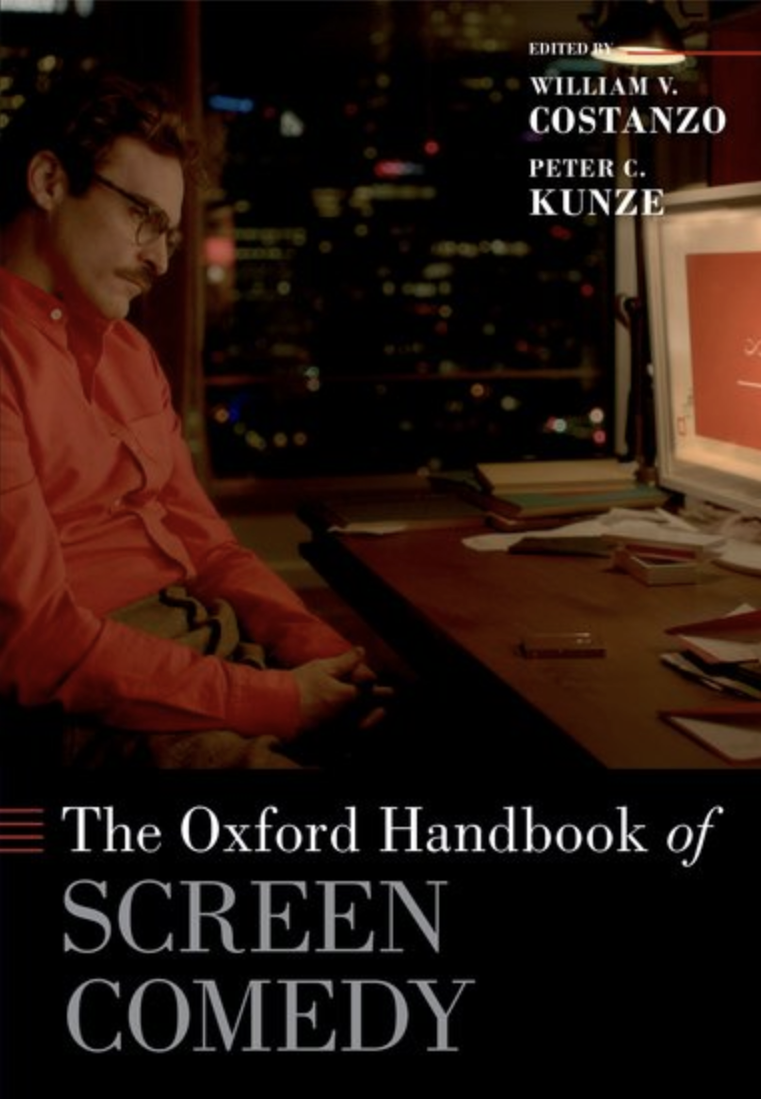
It is no breaking news that, in internet research, things very quickly become recent history. Especially when it comes to handbooks that take some years to put together. Hence, behold!, our chapter with the excellent Jenny Sundén on Twitter’s (now X) humor bots (out of operation since 2023) for The Oxford Handbook of Screen Comedy edited by Peter C. Kunze and William V. Constanzo. The abstract goes like this:

This chapter explores the world of Twitter bots (on the verge of Elon Musk’s rebranding and decision to charge for the platform’s API) from a particular angle: that of absurd humor. It builds on and advances discussions of absurd humor in general—and feminist and queer humor and absurdity in particular—by studying Twitter bots as part of a landscape where absurd humor is generated in algorithmic assemblages of human imagination and nonhuman repetition and randomness. It explores a strategic selection of humorous Twitter bot accounts, combined with background interviews with two of their creators, operating with slightly different logics: Gender of the day (@genderoftheday), which generated imaginative, poetic, and charmingly nonsensical takes on what the gender of the day could be when capaciously envisioned; a bookish kind of humor generated by Victorian queerbot (@queerstreet), which scoured digitized nineteenth-century novels for the terms “gay” and “queer”; and the eerie flora and fauna coined by the fabulously surrealist poetry bot British Gardens (@GardensBritish). The absurd represents the opposite of reason, rationality, and meaning, as its etymological Latin root, absurdus (“out of tune, uncouth, inappropriate, ridiculous”), suggests. Following this semantic route, absurd humor is out of harmony with reason and notions of decency. The chapter focuses on what happens to such incongruity when it involves not only people but algorithms, and what may be learned about the pleasures of repetition, randomness, and surprise and the minor mundane affective lifts this affords by studying the bots’ output.
Leave a comment

Filed under academic pleasures, data culture, humor, internet research, media studies

a roundtable on the future of porn studies

Our roundtable discussion, Shaping Pleasure, Shifting Boundaries: A Roundtable on the Future of Porn Studies with Peter Alilunas, João Florêncio, Angela Jones and myself, is out as part of Porn Studies journal’s tenth anniversary thingie. And this is the abstract:

The roundtable, ‘Shaping Pleasure, Shifting Boundaries: A Roundtable on the Future of Porn Studies,’ took place in June 2024 via Zoom and was recorded, transcribed and then edited to cut digressions and repetitions for publication. The roundtable was intended to examine the transformative trajectory of porn studies over the last decade. With a focus on technological innovations, ethical challenges, and the labour dynamics reshaping the field, the following discussion explores how intersectionality and diverse methodologies have broadened perspectives within porn studies. Our participants also talked about the rise of platforms like OnlyFans, the impact of archival gaps, and the continuing critical tension between pleasure and danger in academic and cultural narratives. Their conversation underscores the necessity of rethinking traditional paradigms while advocating for inclusivity and the preservation of pornographic histories as part of broader cultural heritage. This conversation sets the stage for envisioning the discipline’s future as it navigates a rapidly evolving sociopolitical and technological landscape.

Leave a comment

Filed under academic pleasures, media studies, NSFW, porn studies, sexuality

zoned in and out

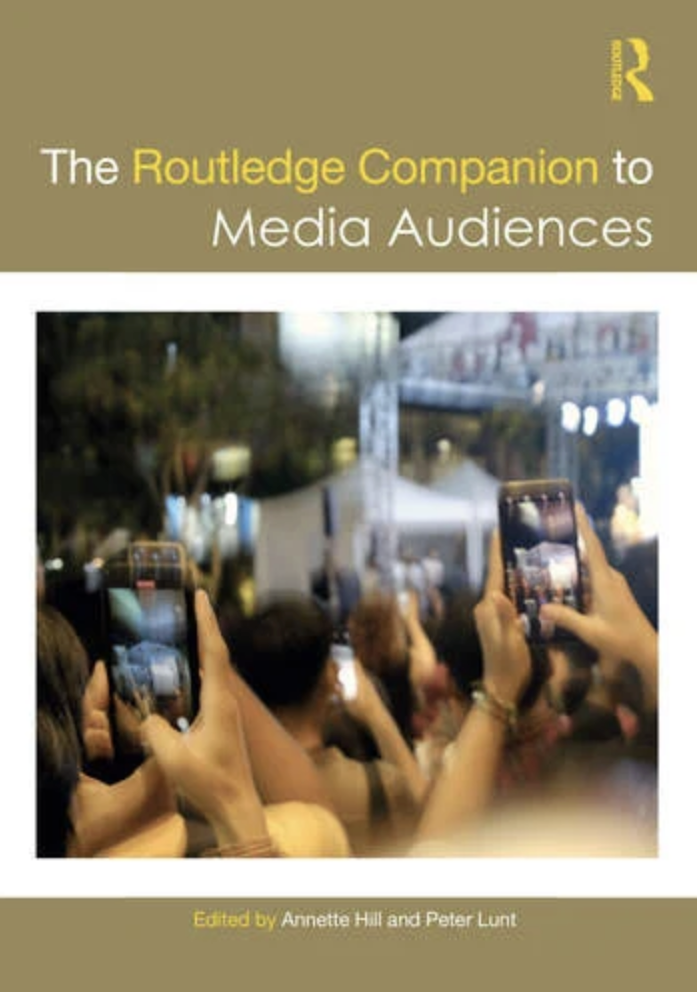
Screenshot 2024-09-17 at 20.05.56The Routledge Companion to Media Audiences edited by Annette Hill and Peter Lunt is just out, or at least on preorder. The massive whopper includes my bit, titled “Bored audiences: Zoned in and out” which addresses casual gaming as oscillations of interest and boredom in order to consider these concepts on less binary terms. The abstract goes like this:

As affective flatness entailing a sense of stuckness in the present, boredom is routinely cast as the conceptual and experiential opposite of interest indicative of the richness of experience. Taking a different analytical route, this chapter makes an argument for considering boredom and interest in dynamic relation with one another as oscillations in affective intensity. It further calls for adding nuance into what boredom actually means by addressing the dynamics of casual gameplay in the context of the limitations on mobility and stimulus caused by the COVID-19 pandemic lockdowns. Characterised by mass appeal, short play sessions, clear rules, and ease of play, casual games are repetitive, and hence potentially boring, while also routinely used as escapes from boredom, and for filling up time. Starting with conceptualisations of boredom as a modern phenomenon, as the conceptual and experiential opposite of interest indicative of the richness of experience, and as a problem endemic to the attention economies of app culture, this chapter asks what the notion means in the current conjuncture of ubiquitous connectivity and mediated engagement. Through a discussion of casual gaming, it sets out to add nuance to what boredom stands for, and how it becomes diagnosed. Deploying ambiguity as an analytical lens, the chapter then addresses boredom as fluctuating rhythms of experience yielding languor, both pleasurable and very much not.

Leave a comment

Filed under academic pleasures, affect theory, cultural studies, media studies

intimate infrastructures

An essay we did jointly with the IDA research team is freshly out with Media Theory’s special section edited by Carolyn Pedwell and Simon Dawes, “Lauren Berlant and Media Theory” (OA). Authored by Vilja Jaaksi, Anu Koivunen, Kaarina Nikunen, Karoliina Talvitie-Lamberg, Annamari Vänskä and myself, the piece is titled “Intimate infrastructures we depend upon: Living with data” and the abstract goes likes this:

This essay takes on Lauren Berlant’s mapping of intimacy as ‘connections that impact on people, and on which they depend for living’ in order to address attachments, dependencies, and vulnerabilities in datafied contexts where digital platforms operate as infrastructures of everyday life. Building on interview material, we explore such intimate attachments as ones rife with friction and inconvenience, asking how vulnerabilities emerge and become differently distributed among our study participants. We argue that thinking about the datafied everyday in terms of intimacy opens up space for considering the fundamental ambiguities involved in what matters to people, what they are attached to, and what they simply need to live with. We further suggest that attending to the complexity and vitality of mundane relating, impacting, and world-making offers ways of exploring techno-capitalist infrastructures of data extraction and mass surveillance in tandem with other attachments and connections that bind, and matter.

Leave a comment

Filed under data culture, internet research, intimacy, media studies

vanilla normies and fellow pervs

Our article with Katrin Tiidenberg, Jenny Sundén and Maria Vihlman is out today on OA with Sexualities. Vanilla normies and fellow pervs: Boundary work on sexual platforms continues our study of local sexual platforms within the Rethinking Sexuality and Intimacy in Data-Driven Culture projects, paving way for our book on the topic currently under contract with MITP. The abstract goes like this:

Building on a study of three Nordic and Baltic digital sexual platforms, this article analyzes the perceptions of enjoyable sex and sexual belonging among 60 people, who self-identify as sexually liberal. In dialogue with Gayle Rubin’s formative work on sexual hierarchies and “good sex,” we explore our participants’ complex and often ambiguous sexual boundary work to delineate liberated sex. Independent of particular preferences (non-monogamy, BDSM, fetishism, and exhibitionism), liberated sex for our participants is definitionally enjoyable and articulated via an aspirational hierarchy based on willingness, diversity/variability, and self-reflexivity—partly set against national sexual imaginaries of vanilla normalcy, yet allowing vanilla some gradations and nuances.

Leave a comment

Filed under data culture, feminist media studies, internet research, media studies, sexuality

technopharmacology is out!

Screenshot 2021-11-07 at 19.47.39Co-authored with the excellent Joshua Neves, Aleena Chia and Ravi Sundaram, Technopharmacology is just out with University of Minnesota Press in the In search of media series and as an open access book with Meson Press. The book explores the close relations of media technologies to pharmaceuticals and pharmacology and calls for expanding media theoretical inquiry by attending to the biological, neurological, and pharmacological dimensions of media and centers on emergent affinities between big data and big pharma. My section focuses on diagnoses of online porn addiction and makes an argument for attending to the excitements that make the self. This was fun to make.

Leave a comment

Filed under affect theory, data culture, media studies, sexuality

multiplatform 2022: corporealities

Multiplatform 2022: Corporealities, a Conference on Bodies and Embodiment in Games at the Manchester Metropolitan Game Centre has been moved online due to pending rail strikes. Should you be interested in my keynote on sex, play and networked pleasures on Friday, June 23, Zoom is now an option.

Leave a comment

Filed under academic pleasures, media studies, play, sexuality

more intimacy in data-driven culture

IDAHappy news! Our Intimacy in Data-Driven Culture consortium got funding for 2022-2025 from the Strategic Research Council at the Academy of Finland. During the second funding period we’ll continue to probe vulnerabilities connected to datafication among different groups of people with a cross-disciplinary research team at University of Turku, Tampere University, Aalto University and Åbo Akademi University. As PI, am feeling very, very fortunate.

Leave a comment

Filed under academic pleasures, data culture, media studies

workshop: creative methods on digital intimacies, 27 May

GetFileAttachment-1University of Turku, Arcanum A270
 
Workshop: Creative methods on digital intimacies
27 May 2022, 12-15pm
 
Join us for a workshop (live + Zoom) on creative methods for doing and communicating research. Our invited speakers will present their respective projects on digital intimacies and their solutions for both distributing their outcomes to the broader public through unconventional means and incorporating artistic inquiry into their palette of methods. We welcome all participants interested in discussing the intersections of research, creative methods and science communication!
 
Invited talks:
 
Jamie Hakim (King’s College London) & James Cummings (University of York), Digital Intimacies: using fanzines to communicate research on how queer men use smartphones to negotiate their cultures of intimacy (check out their zine here)
 
Antonia Hernández (McGill University), Sexcams in a Dollhouse: creating and using an art-based research device
 
The workshop is organised by the department of Media Studies and the consortium Intimacy in Data-Driven Culture (Strategic Research Council at the Academy of Finland), https://www.dataintimacy.fi/en/

Leave a comment

Filed under academic pleasures, cultural studies, data culture, internet research, media studies, NSFW, sexuality

short-lived Play

As part of our recently finished research project, Sexuality and Play in Media Culture, Laura Saarenmaa and I explored Leikki (Play), a mid-1970s Finnish sex magazine for women. This lead us to consider popular sex ed of the era, feminist affiliations and methodological challenges. The outcome is now out as “Short-Lived Play: Trans-European Travels in Print Sex Edutainment”, on open access with Media History. And here’s the abstract:

Media history is still written largely from national perspectives so that the role of import and export, translations and franchises is seldom foregrounded. On geographically and linguistically limited markets, imported materials have nevertheless been crucial parts of popular print culture. This paper explores the market of ‘sex edutainment’ magazines in 1970s Finland, zooming specifically in on Leikki (‘Play’, 1976), a sex magazine for women translated from the Norwegian Lek (first launched in 1971) that provided knowledge on topics ranging from marriage to masturbation and lesbian desire. Through contextual analysis of Leikki, a marginal publication that has basically faded from popular memory, this article attends to ephemeral and even failed print media in order to account for the heterogeneity of the 1970s sex press market as it intermeshed with sex advice and education. In so doing, it adds new perspectives to a field largely focused on successful periodicals and addresses knowledge gaps resulting from the exclusion of the sex press from mainstream media historiography.

Leave a comment

Filed under academic pleasures, feminist media studies, media studies, play, sexuality